December Birthstone
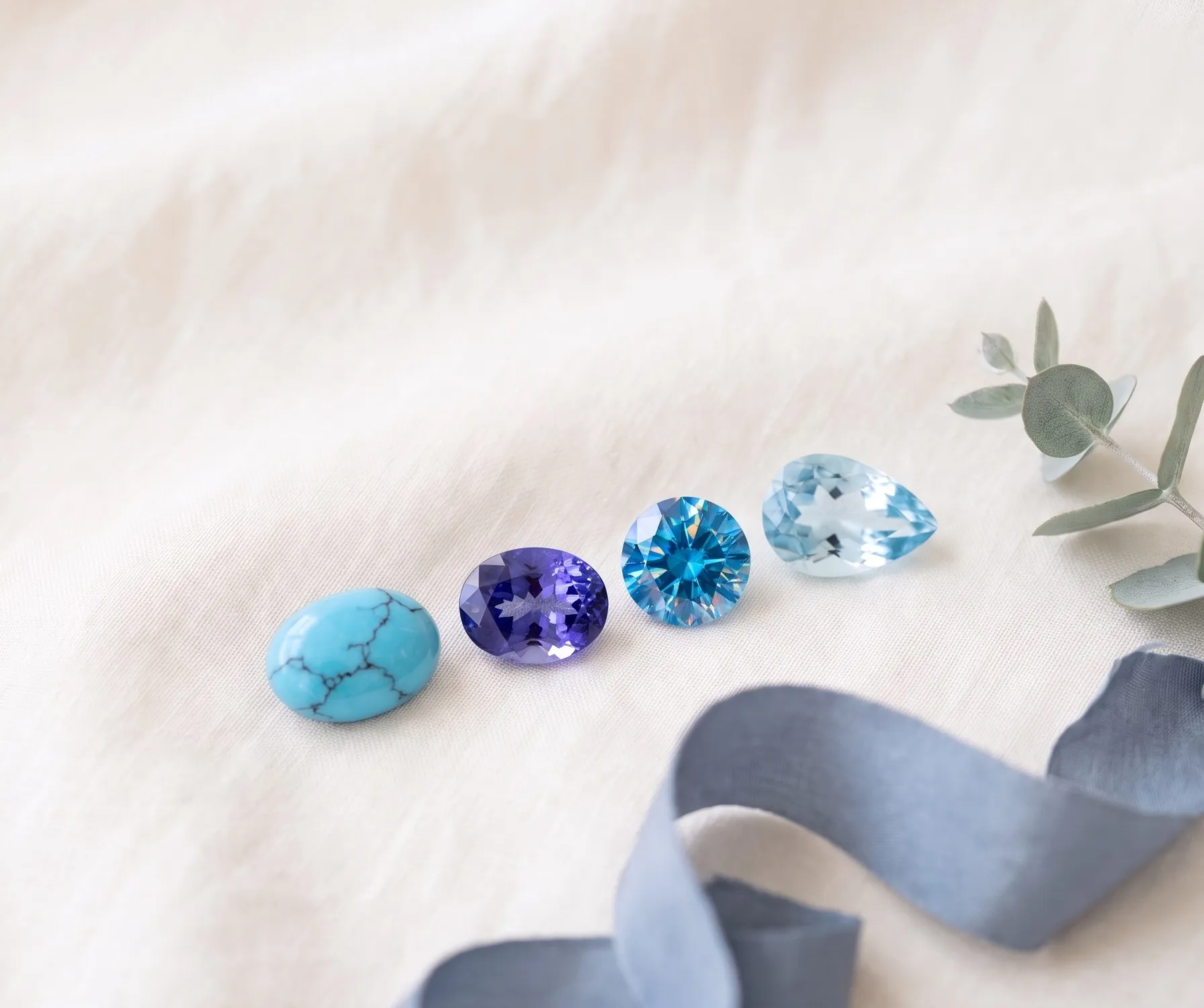
Born in December? You get your pick of blues. December has three birthstones, turquoise, tanzanite, and zircon, though some jewelers name blue topaz instead of zircon. If you're giving one, old European folklore is on your side: a turquoise was said to keep its wearer safe in a fall from a horse, but only if it came as a gift.
December birthstone colors
There's no single official birthstone chart. In the US, four jewelry trade groups each publish their own list: the Gemological Institute of America (GIA), the American Gem Trade Association, the American Gem Society, and Jewelers of America. For December, all four agree on turquoise and tanzanite, and they split on the third stone.
| Stone | Color | Which groups list it |
|---|---|---|
| Turquoise | Sky blue to green, often veined | All four groups |
| Tanzanite | Blue to violet | All four groups |
| Zircon | Bright blue | Every group except Jewelers of America |
| Blue topaz | Blue | Only Jewelers of America |
December's color is blue, in a few different moods. Because the four groups never agreed on a single stone, you can choose the blue that suits the person.
And yet for most of history, December wasn't blue at all.
Why December has more than one birthstone
Before 1912, December's stone was usually the ruby, about as far from blue as a gem can get.
The gem expert George Frederick Kunz collected eight older birthstone lists, from ancient Rome to Poland and Russia, and ruby held December in six of them. Even December's birthstone rhyme asks for red. Tiffany & Co. printed it in 1870, and nobody knows who wrote it:
If cold December give you birth,
The month of snow and ice and mirth,
Place on your hand a ruby true;
Success will bless whate'er you do.
Then came the meeting that turned December blue.
In August 1912, a national association of retail jewelers met in Kansas City with a problem to fix: birthstone lists varied from one part of the country to another. So they voted on one official list for everyone. That group is known today as Jewelers of America.
Their new list moved the ruby to July. December got turquoise instead, with lapis lazuli, a deep blue stone flecked with gold, as a second choice.
Why the swap? As Kunz reported it, the jewelers felt the warm red ruby suited summer, "while the paler turquoise was best suited to a winter month, when the sun's rays are feeble." Kunz thought they had it exactly backward, "for it is in winter that we seek for warmth."
Forty years later the list changed again.
In 1952 the Jewelry Industry Council released a revised list that gave December turquoise and blue zircon. Lapis lazuli quietly dropped off, which seems a shame for a stone so prized in ancient Babylonia and Egypt.
Tanzanite arrived fifty years after that.
The idea came out of talks among the industry's trade association leaders earlier in 2002, and they agreed on it together. On October 30, the American Gem Trade Association made it official.
Its executive director, Douglas Hucker, was refreshingly honest about why. Tanzanite was already "the most popular blue gemstone after sapphire," he said, and putting it on the list should increase demand for it.
He was just as frank about birthstones in general. "There's no astrological authority" behind them, he said, and "most birthstones were established through tradition." Tanzanite was the exception. The world had known it for only 35 years.
Today the lists still don't quite match.
Three of the groups list zircon. Jewelers of America lists blue topaz instead.
Turquoise, however, has held on to its spot through every change since 1912.
- Before 1912Ruby
- 1912TurquoiseLapis lazuli
- 1952TurquoiseBlue zircon
- 2002Tanzanite added
- TodayBlue topazJewelers of America list
Turquoise, the oldest December stone
Turquoise is a lot older than its name. The word goes back to the 1200s, from the French for "Turkish stone," probably because it first reached Europe from Turkish sources. By then the stone was already ancient. The rulers of ancient Egypt wore turquoise, and artisans in China were carving it more than 3,000 years ago. Persia has mined it in the Nishapur district for over a thousand years, and in Tibet it's the national gem.
In 1600s Europe, turquoise was thought of as a man's stone. Writing in 1609, the gem writer Anselmus De Boot said no man "considered his hand to be well adorned unless he wore a fine turquoise," and that women rarely wore one.
It was a rider's charm, too. From the 1200s on, European folklore said a turquoise protected its wearer from falls, especially from horseback. A jester at the court of Emperor Charles V had a cheekier take. If you fell from a tower wearing one, he said, "the turquoise would remain unbroken."
De Boot's own turquoise came with a story, and it starts with a gift. The stone had lost all its color, so his father got it for almost nothing, then felt too embarrassed to wear it. He gave it to his son, Anselmus, saying the stone's virtues "are said to exist only when the stone has been given." As the story goes, the color came back. Not long after, riding home at night on a narrow, dangerous road, De Boot was thrown when his horse stumbled. Neither horse nor rider was hurt, and the next morning he found that a quarter of his turquoise had broken away. It's only folklore, but what a story to share when you give one.
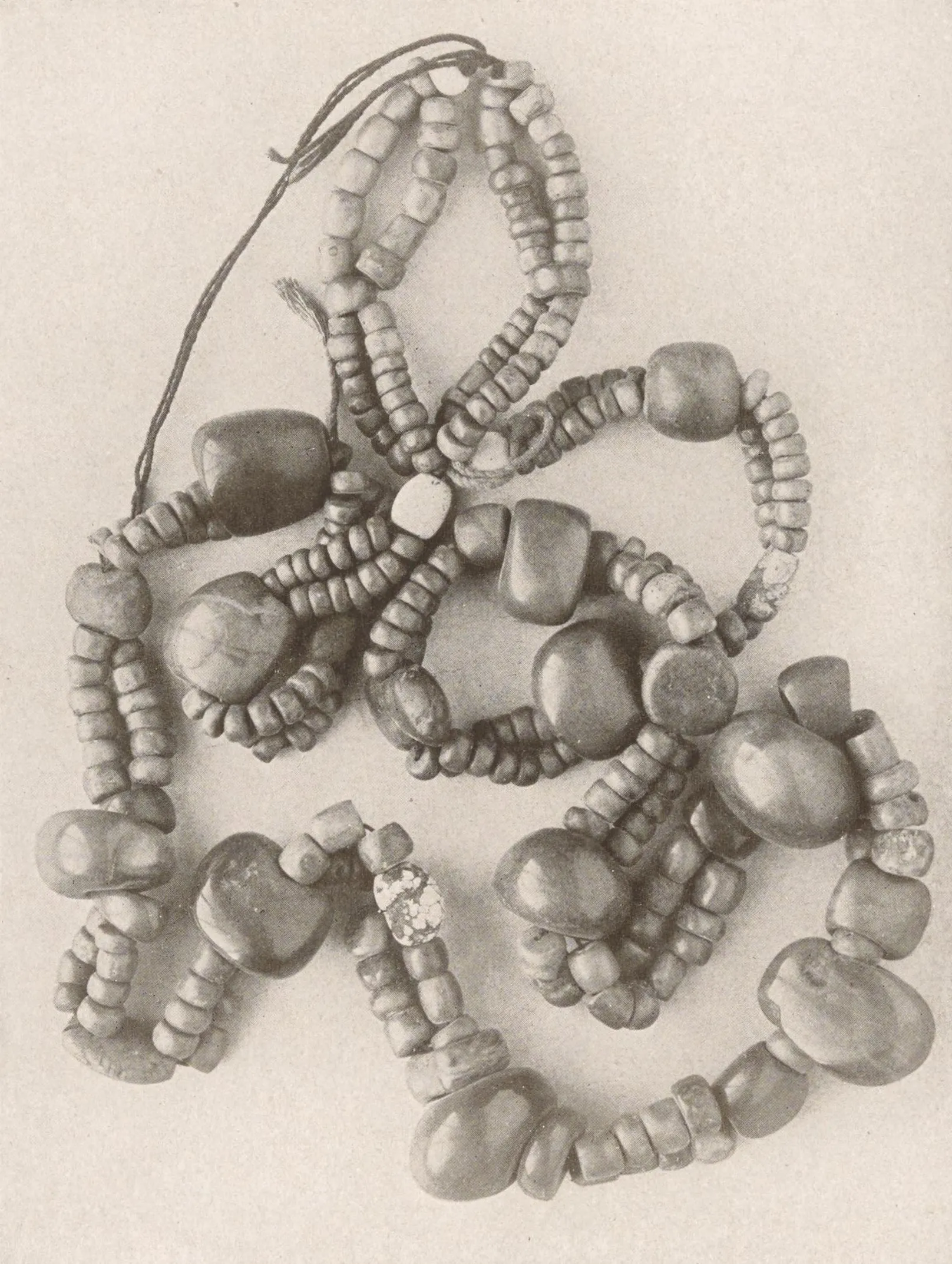
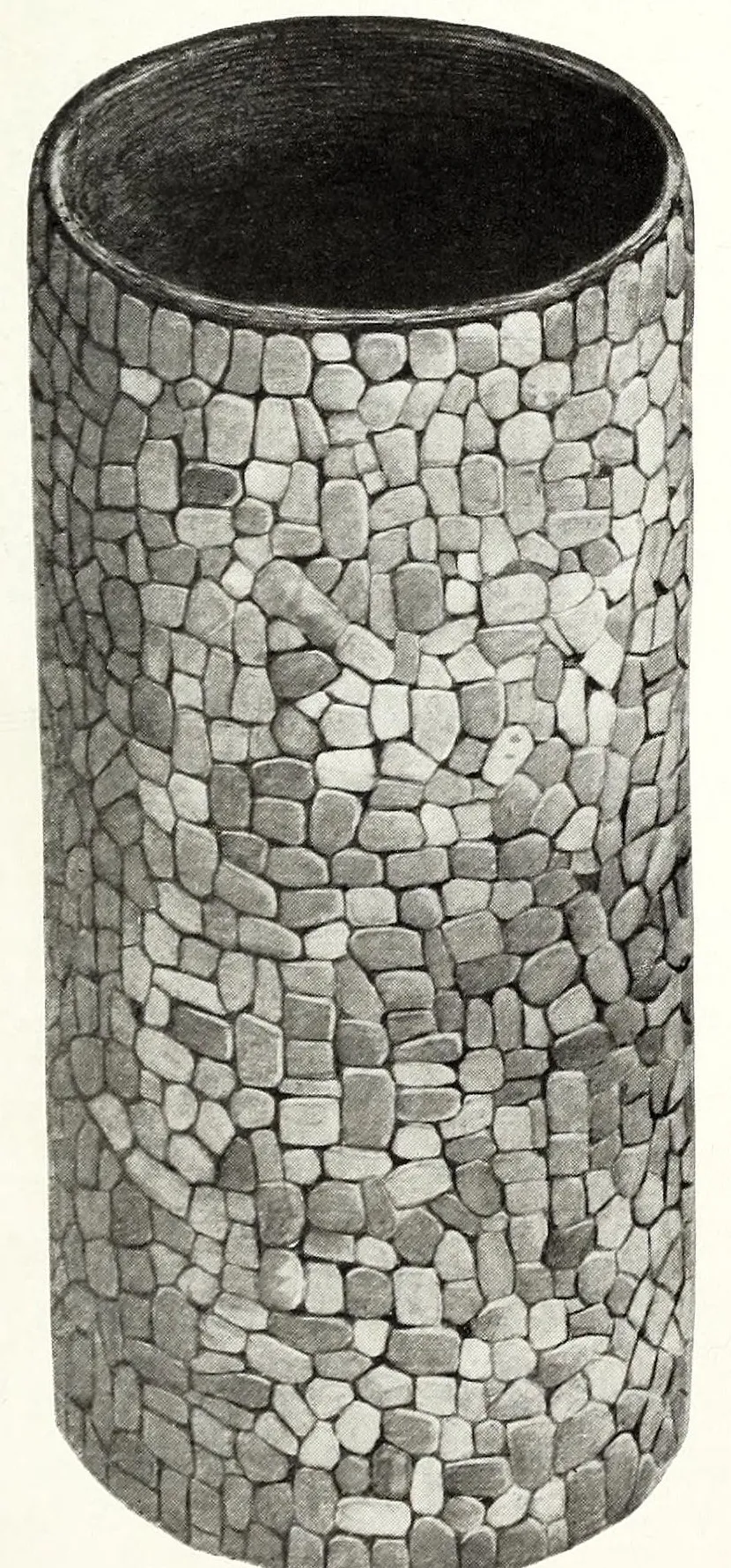
Turquoise has a long story in the American Southwest. In 1896, excavators at Pueblo Bonito, in Chaco Canyon, New Mexico, found nearly 9,000 turquoise beads and pendants with a single burial, along with a basket covered in a mosaic of 1,214 pieces of turquoise.
The silver-and-turquoise jewelry most people picture today came much later.
It started with a forge. In 1853 the US government opened an agency for the Navajo, staffed with a blacksmith and a Mexican silversmith. A Navajo headman named Herrero, later called Atsidi Sani, is credited as the first Navajo silversmith.
The silver itself came from coins. Native people of the Southwest never mined silver, so smiths worked with old Spanish and Mexican coins. Around 1880 they began setting turquoise into that silver, and the classic look was born.
For many Native peoples of the Southwest, turquoise carries a deep meaning. To learn more, visit a Native-led museum, or ask the artist who made your piece.
How to tell if turquoise is real
Most turquoise you'll find for sale is real, but it has usually been treated. That's not a trick. About 85% of it comes out of the ground too soft to cut or polish, so it needs some help before it can become jewelry. Only about 15% of the world's supply is natural, straight from the earth with nothing added.
So when you shop, the question to ask is whether it's natural.
Here's what the words on a listing or a tag mean:
- Natural: nothing added, nothing changed.
- Stabilized: hardened with clear resin under pressure, which also darkens the color.
- Enhanced: darkened by a patented process to look like a higher grade.
- Oiled or waxed: soaked or cooked in oil or wax to deepen the color.
- Dyed: color added, sometimes to paint in the veins.
- Blocked: chips and fragments mixed with epoxy into blocks for cutting.
- Reconstituted: made from turquoise ground into powder.
None of these treatments is a problem, as long as the seller tells you. The US Federal Trade Commission's jewelry guides say a seller should mention any treatment that isn't permanent, needs special care, or makes a big difference to what the stone is worth. When you shop online, look for it in the product description.
The FTC's guides even cover the word "birthstone." A lab-made or imitation stone should only be called one if a word like "laboratory-created," "imitation," or "simulated" comes right before it, in letters just as easy to read. "Faux" isn't enough. So a listing that simply says "birthstone" should mean the real thing.
What makes one turquoise worth more than another? Mostly the consistency of its color, its clarity, and its matrix, the pattern of veins running through the stone. The rarest of all is a fine "spider web" matrix. Blue and green stones have similar value, so choose the shade they'll love.
Buying Native-made turquoise jewelry
A piece made by a Native artist is a gift with a real person behind it. A few simple habits will help you find one:
- Buy close to the maker. The artist, a tribal enterprise, or a Native-led museum shop is the surest place to start.
- Ask who made it. A good seller can tell you the artist's name and tribe.
- Ask about the stone, too: natural, stabilized, or treated.
- Get both answers on your receipt.
And the law is on your side. The Indian Arts and Crafts Act makes it illegal to sell work as Native-made when it isn't.
Tanzanite, the newest December stone
People were wearing turquoise in the days of the pharaohs. Tanzanite wasn't found until 1967, two years before anyone walked on the moon.
It turned up in the Merelani Hills of northern Tanzania, in the foothills of Mount Kilimanjaro, where a Maasai man came across a cluster of violet-blue crystals. A local prospector, Manuel de Souza, staked claims, thinking he'd found sapphire. He hadn't. What he'd found was something new, a blue-violet variety of a mineral called zoisite.
In 1968 the cut stones reached Henry B. Platt at Tiffany & Co. After checking with the Smithsonian, Platt named the stone tanzanite, for the country where it was found, and Tiffany launched it that same year with a big publicity campaign. Barely a year out of the ground, it was a Tiffany gem.
Almost all tanzanite is heated to bring out its blue, and the change is permanent. Tilt one and watch it trade violet for blue and back again. It's on the soft side and scratches easily, so the Gemological Institute of America suggests earrings or a pendant rather than a ring worn every day.
And it's still a one-place stone. Every tanzanite you can buy came from that small corner of Tanzania, the only place on Earth where it's mined commercially.
Zircon, the December stone that isn't cubic zirconia
Zircon has a name problem. People often mix it up with cubic zirconia, but zircon is a natural gem, mined in places like Sri Lanka and Australia. It has worn a few other names over the centuries, too.
In the Middle Ages it usually went by jacinth, and folklore gave it some handy powers. It could lull you into a deep sleep and scare off evil spirits, and it was said to protect travelers and assure them a welcome at any inn. One old writer, Cardano, wore one and gave it an honest review: it "seemed to dispose somewhat to sleep, but not much."
The Victorians adored blue zircon, and fine examples turn up in English estate jewelry from the 1880s.
Then its sparkle got it into trouble. Zircon's fire comes so close to a diamond's that in the early 1900s colorless zircon was widely used as a stand-in for diamonds. That's why its name still makes a lot of people think "imitation."
Tiffany has a part in this story, too. George Kunz, the company's gem buyer, liked blue zircon so much that he tried to give it a prettier name, "starlite." It never caught on.
Blue topaz
Jewelers of America lists blue topaz for December, and plenty of jewelers sell it as December's stone. It's real topaz, but its blue almost never comes from nature. Nearly all of it starts out colorless and is irradiated to turn it blue, a treatment first used in 1957. The color is permanent, and so much blue topaz has been made since the late 1970s that it costs very little.
Giving a December birthstone
You really can't go wrong with December. Turquoise carries thousands of years of history. Tanzanite is the newcomer, with a color that shifts as it moves. Zircon brings the sparkle, and blue topaz is the gentlest on a budget. Start with the blue that suits them, then let the stories help you choose.
Shopping for a man? Turquoise has history on its side. In 1600s Europe, no well-dressed man thought his hand was finished without one.
For someone who loves to travel, zircon is the old travelers' stone, said to keep them safe on the road and win them a welcome at any inn.
And December's stones aren't only for birthdays. GIA's gem experts list them for anniversaries, too: blue topaz for the 4th anniversary, turquoise for the 11th anniversary, and tanzanite for the 24th anniversary.
If you're giving a claddagh ring, a December stone in the heart makes it theirs.
What to look for in December birthstone jewelry
Our Amazon links are for turquoise jewelry in general, and we can't tell you who made any of it. If Native-made work matters to you, go to the artist or a museum shop.
As an Amazon Associate, we earn from qualifying purchases.
- Turquoise set in sterling silver is the classic, and it's what we'd pick first. Sterling is 92.5% silver, and "German silver" and "nickel silver" aren't silver at all.
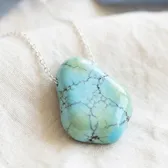
See turquoise sterling silver rings on Amazon - Natural turquoise is the rare 15%, so look for the word "natural" in the description.
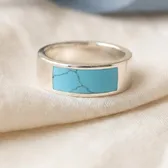
See natural turquoise jewelry on Amazon - A men's turquoise ring carries on the old European idea of turquoise as a man's stone.
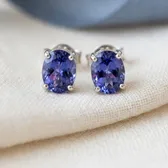
See men's turquoise rings on Amazon - Tanzanite earrings or a pendant keep this softer stone safe from everyday knocks.
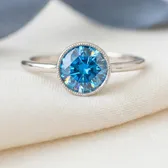
See tanzanite earrings on Amazon - A blue zircon ring is the one we'd choose for someone who loves vintage sparkle. Its blue usually comes from heating, and a few heated stones can drift toward light brown after long hours in bright light.
See blue zircon rings on Amazon - Blue topaz follows the Jewelers of America list.
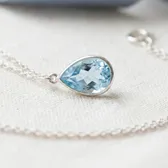
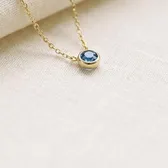
See blue topaz necklaces on Amazon - A December birthstone necklace with a small stone is easy to give when you don't know their ring size.
See December birthstone necklaces on Amazon
Sources
- George Frederick Kunz, The Curious Lore of Precious Stones, 1913
- Oliver Cummings Farrington, Gems and Gem Minerals, 1903
- GIA, "December Birthstones"
- GIA, "Turquoise History and Lore"
- GIA, "Zircon History and Lore" and "Zircon Description"
- GIA, "Tanzanite History and Lore" and "Tanzanite Description"
- GIA, "Topaz Description"
- Jewelers of America, "Birthstones"
- American Gem Society, "December Birthstones"
- American Gem Trade Association, "About" (timeline)
- National Jeweler, "Rocks On: how the modern birthstone list came to be," Brecken Branstrator, August 2016
- George H. Pepper, "The Exploration of a Burial-Room in Pueblo Bonito, New Mexico," Putnam Anniversary Volume, 1909
- Bassoo, Eames, Hardman, Befus, and Sun, "Texas topaz," Gems & Gemology, Winter 2023
- JCK, "Tanzanite becomes a December birthstone," Hedda Schupak, November 2002
- Evening Star (Washington, D.C.), "For uniform list," August 7, 1912
- East Hartford Gazette, "What's your birthstone?", December 1952
- Tiffany & Co., "Tiffany Colored Gemstones," press page
- US Department of the Interior, Indian Arts and Crafts Board, "The Indian Arts and Crafts Act"
- Indian Arts and Crafts Board with the Turquoise Museum, turquoise brochure, 2018
- Federal Trade Commission, "Buying American Indian Arts and Crafts," September 2024
- Federal Trade Commission, Jewelry Guides, 16 CFR 23.24 and 23.25
- Heard Museum, Southwest Silverwork, 1850 to 1940, Robert Bauver, guest curator