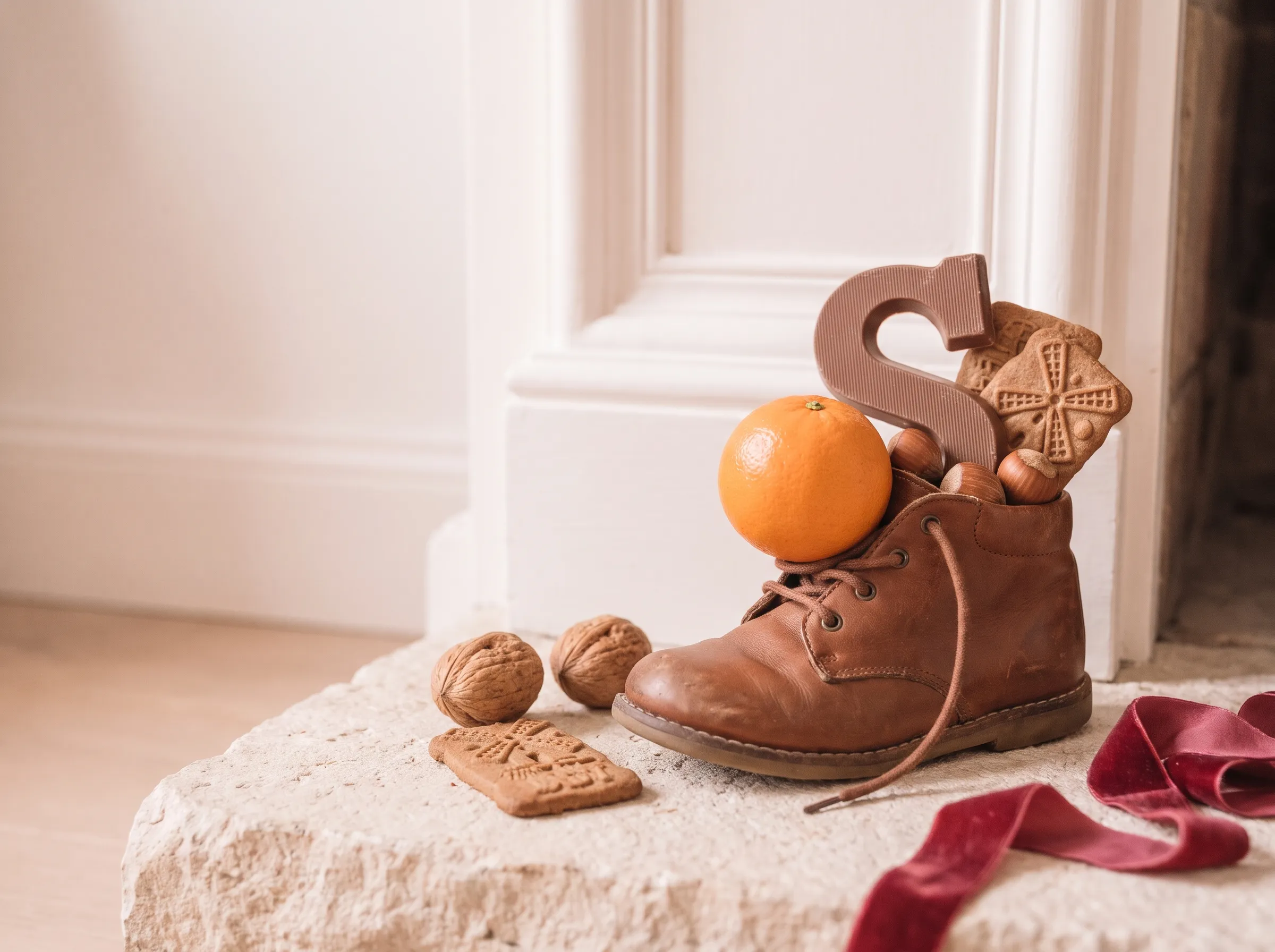
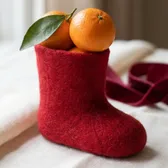
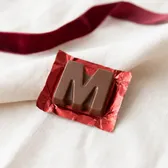
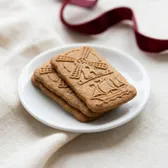
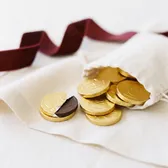
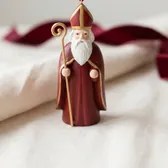
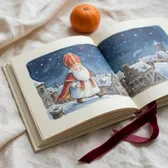
In the Netherlands, children set a shoe by the fireplace on the night of December 5, and in the morning they find it filled. The gift is small and it comes overnight: an orange, a few spiced cookies, a chocolate letter. December 6 is the feast of St. Nicholas, a bishop who lived in what is now Turkey in the 300s, and the saint that Santa Claus grew out of. In several European countries it's a gift day all its own, arriving weeks ahead of Christmas. The best-loved story about Nicholas tells how he gave gifts in secret, and the shoe is still filled the same way.
1
When is St. Nicholas Day?
St. Nicholas Day is December 6, every year. The date marks the day Nicholas died, which tradition places around the year 343.
The gift usually comes the night before. Dutch children put out their shoes on the evening of December 5 and look inside on the morning of the 6th. Their families often trade presents that same evening, a night they call pakjesavond, "parcels evening." The Czech Republic keeps the 5th as well, for a reason that goes back a long way: the day used to begin at sunset, so the evening of the 5th already counted as the 6th.
2
What goes in the shoe
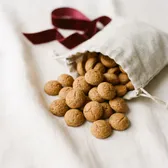
St. Nicholas gifts are usually small, and most of them are good to eat. Dutch children find oranges, sweets, and chocolate bars shaped like letters. In Belgium, good children wake up to speculoos, spiced cookies similar to Biscoff, along with chocolate figures, marzipan, mandarins, and a few coins.
Children leave something out for St. Nicholas too. In Dutch he's called Sinterklaas, and in the old stories he rides a horse over the rooftops. Some children in the Netherlands tuck a carrot into the shoe for the horse, along with a wish list. In Belgium, they set out milk, or even beer, for Sinterklaas himself, and a carrot and a sugar cube for the horse.
Naughty children didn't always get treats. Years ago, a Dutch child who misbehaved might awaken to find a potato in their shoe.
3
Why a shoe?
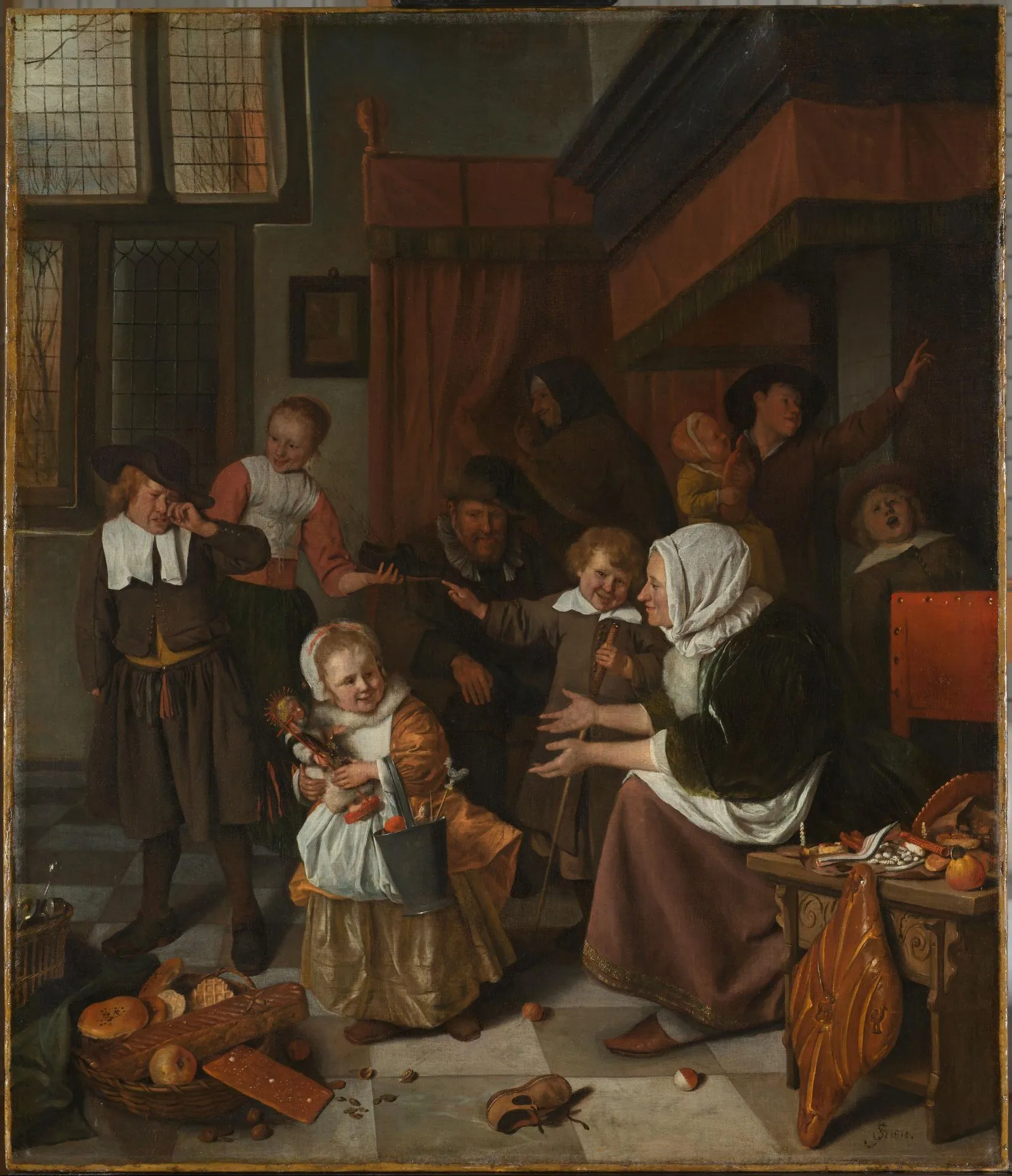
The shoe is the oldest part of the tradition we can still see. Between 1665 and 1668 the Dutch painter Jan Steen painted The Feast of St Nicholas, now in the Rijksmuseum in Amsterdam. The good children in it have their treats, and one boy wails, because his shoe holds only a switch, a bundle of twigs.
Jan Steen, The Feast of St Nicholas, 1665 to 1668. The real painting, in the Rijksmuseum.
By Steen's day the custom was already old. Children have been getting small gifts on December 6 since the 1100s. In the Middle Ages, Dutch families told their children that on the night of the 5th, Nicholas rode his horse over the rooftops and dropped presents down the chimneys. In the morning the children found them, often hidden in their shoes.
The custom nearly didn't survive. When Amsterdam became Protestant, a rhyme in the city's Old Church recorded that the "abuse" had been abolished in 1578, and in 1663 Mayor Nicolaes Tulp tried to stop the feast again. It didn't work. People went on selling December cookies and hiding presents in their children's shoes, and some staged visits from a man dressed as a bishop.
4
Who was St. Nicholas?
Nicholas was bishop of Myra, a town in what is now southwest Turkey, in the 300s. That is almost the only thing about him historians can call certain. No account of his life from his own time survives, and the first full biography was written centuries after he died. He's said to have been born at Patara, a port on the same coast. He may have been at the Council of Nicaea in 325, the great gathering of bishops, but the old lists of who attended disagree.
So little is known about the man, and yet his name traveled a very long way. He became the patron saint of sailors, merchants, bakers, travelers, and children, and of whole countries, from Greece to Russia.
Even his bones got around. In 1087 Italian merchants carried them off from his tomb at Myra to Bari, in southern Italy, and two years later the Pope consecrated a new crypt there to hold them.
5
The story behind the gifts
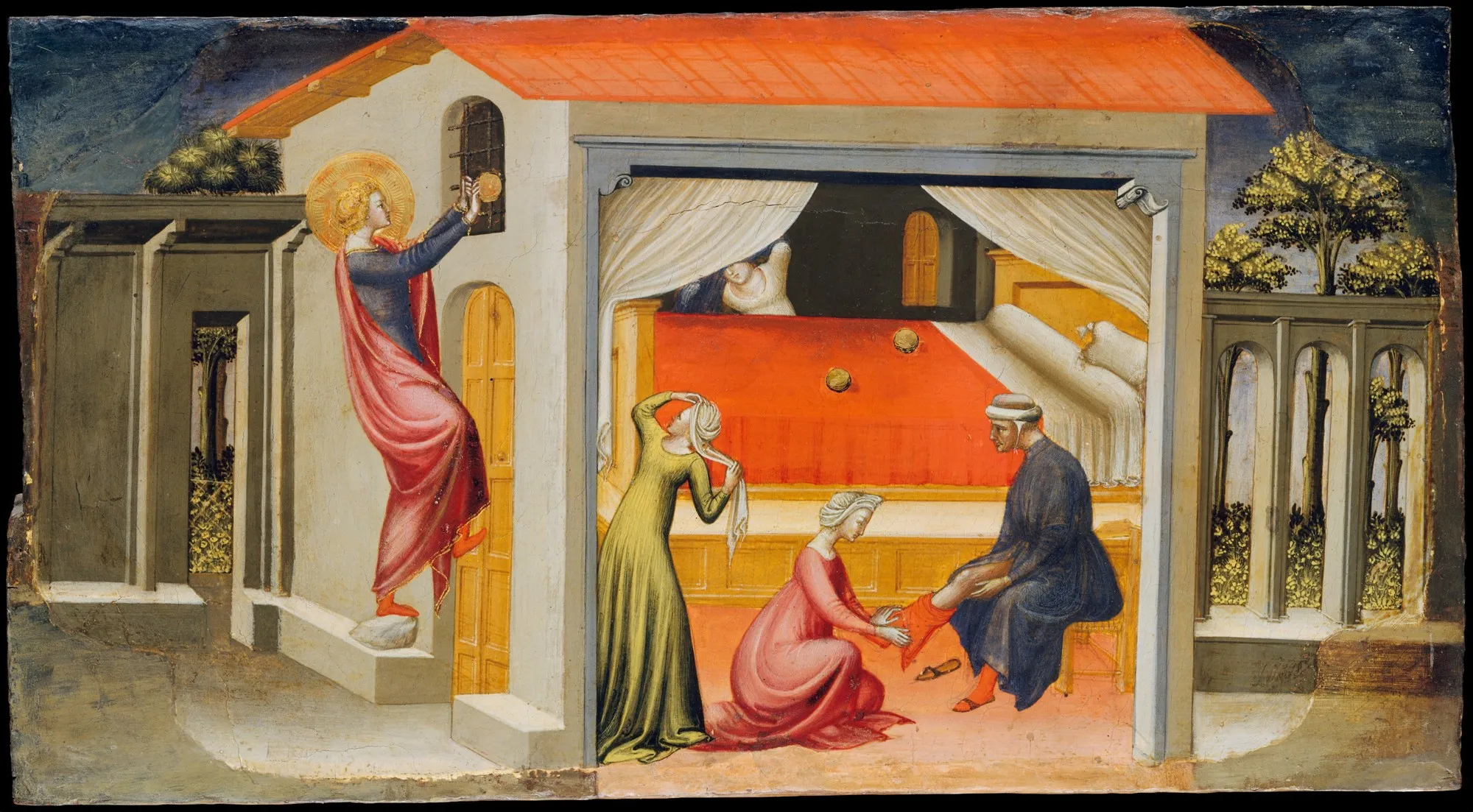
The story goes that a poor man had three daughters and no money for their dowries. Without a dowry they couldn't marry, so his poverty threatened to push them into prostitution just to survive.
One night Nicholas secretly threw a bundle of gold into the house, and the father used it to marry off his eldest daughter. When more gold mysteriously showed up, the father began staying up at night to discover who was helping them.
Nicholas came a third time with twice as much gold, and the father heard it land. He ran after him, calling out for him to stop. When he caught up, he fell to his knees to kiss the saint's feet, but Nicholas wouldn't let him. He only asked the father to keep the secret for as long as he lived.
That's the version in The Golden Legend, a collection of saints' lives written in the 1200s and printed in English in 1483. It has no window in it, and no chimney, stocking, or shoe. Those details came later, as people kept retelling the story.
Bicci di Lorenzo, Saint Nicholas Providing Dowries, 1433 to 1435. The real panel, in The Met.
Could it really have happened? Some historians think the story may have a foundation of truth, since rescuing girls from that kind of future has no parallel in older pagan tales. The historian Jona Lendering spotted a small puzzle in it, though. If the father kept the secret, nobody ever explains how the story got out.
The Dutch once called Nicholas Goedhuwelijksman, "the good marriage man." Over time people heard it as Goedheiligman, "the good holy man," but the older name points straight back to the three sisters.
6
St. Nicholas Day traditions around Europe
The Netherlands: Sinterklaas
In the Netherlands, Sinterklaas doesn't wait for his own day. He arrives on a Saturday in mid-November, by steamboat, no less, said to have sailed all the way from Spain. Dutch television has carried the event since 1952. How long has he been coming from Spain? Since at least 1658, when a book already had him arriving from there. The steamboat came almost two hundred years later, around 1850, when an Amsterdam schoolteacher named Jan Schenkman wrote it into a children's book.
Grown-ups have Sinterklaas traditions of their own. Friends or family draw names, agree on a spending limit, and wrap each gift as a surprise, disguised as something else entirely. Every gift comes with a rhyming poem, written as if by Sinterklaas himself, that gently teases whoever opens it. Older children get to join in once they've learned the secret, and for them it's a rite of passage.
Germany: Nikolaustag
In Germany, December 6 is Nikolaustag, and Nikolaus has long been the secret giver of children's presents there. The Reformation gave him company. Martin Luther taught that children's gifts came from "the Christ child or St. Nicholas," and in his own house, from 1531, the presents are said to have come from the holy Christ. Luther is often called the inventor of the Christkind, the Christ child who brings gifts at Christmas, though that claim is disputed. Either way, Nikolaus never gave up his own day, so many German children end up with two gift-bringers: Nikolaus on December 6 and the Christkind at Christmas.
Austria: Krampus
In Austria, St. Nicholas brings sweets and nuts to well-behaved children on December 6, but he doesn't come alone. His companion is Krampus, and Krampus is terrifying. He wears a mask carved from pine, horns and shaggy fur from local goats and rams, and bells that clang as he walks, and he carries a chain and a rod for the naughty. The treats come only from Nicholas.
Where Krampus came from is still largely a mystery, but he isn't hard to find. On the nights around December 5, masked Krampuses take over the streets in raucous parades, especially in Salzburg and Tyrol. In the Gastein Valley alone, around a hundred groups take part. And they don't just march past. They're known to chase the crowd, rods in hand.
The Czech Republic: Mikuláš
In the Czech Republic, Mikuláš makes his rounds on the evening of the 5th, and he brings two helpers, an angel and a devil. The three of them quiz children on whether they've behaved over the past year. A child who passes recites a poem or sings a song and gets sweets, chocolate, fruit, or a small present. The naughty ones are warned they could get a potato or a lump of coal, and the devil may threaten to carry them off to hell in his sack.
Students and grown-ups dress up as the three and call at homes, town squares, and even restaurants. In Prague, a crowd gathers in Old Town Square. The costumes are mostly homemade. The angel's wings are often tin foil, the devil is often a teenage girl in flashing red horns, and Mikuláš himself may be a gawky thirteen-year-old doing his best to look old and wise.
7
St. Nicholas and Santa Claus
The name still shows where Santa came from. "Santa Claus" is a blend of the Dutch Sinterklaas and the German Sankt Niklaus.
New York began as the Dutch town of New Amsterdam, and the Dutch there are said to have kept the feast of St. Nicholas. How much of the custom survived into colonial New York is debated.
The Santa we know took shape in New York between 1809 and 1823, through a run of books, prints, and poems. The run began on St. Nicholas Day in 1809, when Washington Irving published a satire called A History of New-York, with a pipe-smoking Dutch Nicholas in it.
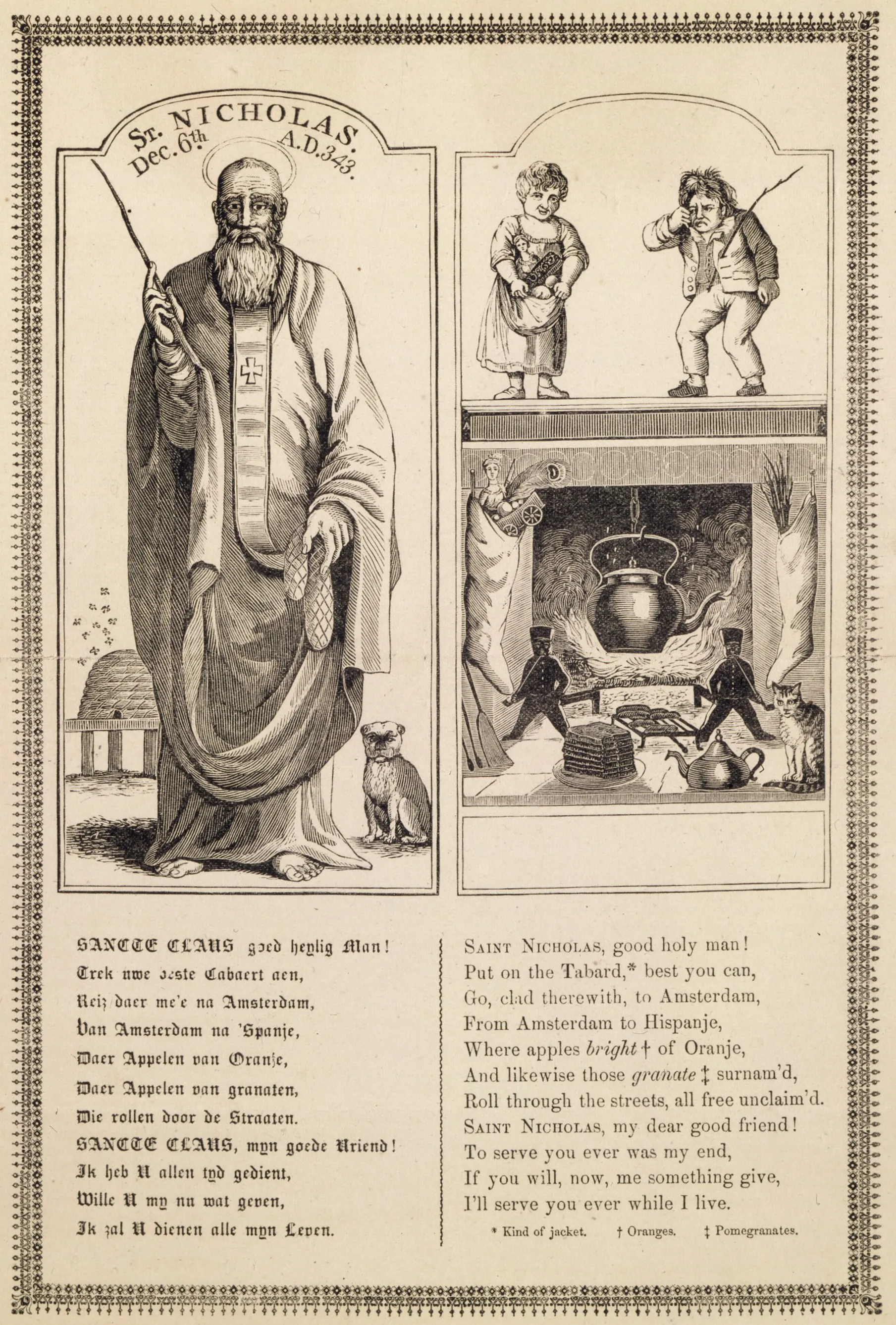
In December of 1810, John Pintard had a print made for the New-York Historical Society's St. Nicholas dinner, showing Nicholas as a bishop with a purse of money and a birch rod. Beside him, two stockings hang by a fireplace, one full of toys and treats and the other holding only a rod.
Alexander Anderson's woodcut for John Pintard, 1810. A copy of the real print.
In 1821 a little booklet called The Children's Friend put "Santeclaus" in a sleigh pulled by a flying reindeer on Christmas Eve. Two years later the Troy Sentinel printed a poem with no author's name on it, "A Visit from St. Nicholas."
Who ultimately deserves the credit for our modern Santa Claus is still argued over. For decades scholars gave it to Irving. The historian Tom Jerman points out that Irving's 1809 edition names Nicholas only as the city's patron saint, and that the passages about midwinter gifts first appeared in the 1812 edition. Jerman sees the 1821 booklet, reindeer and all, as Santa's real beginning.
Along the way, the gifts moved to a new day. Nicholas came on December 6, while the American Santa comes on Christmas Eve.
Nicholas still has his own day, though, and it comes first.
8
Giving a St. Nicholas Day gift
We'd keep a St. Nicholas gift small, a little something in a shoe by the fireplace, and save the big present for Christmas. Part of the fun is how little it takes.
For children, it's a lovely first taste of the season. If your family has Dutch, Belgian, German, Austrian, or Czech roots, it's a way to bring an old custom back home. For a group of grown-ups, borrow the Dutch idea of drawn names, a low limit, and a teasing poem.
And since secret giving is the heart of the old story, it suits anyone who would rather not sign the card.
What to look for
As an Amazon Associate, we earn from qualifying purchases.
Clementines or mandarins are the classic, and a couple of them tucked into a small felt boot make the whole gift. See felt Christmas boots on Amazon
Speculaas cookies, called speculoos in Belgium, are the spiced cookie of the season in the Netherlands and Belgium. See speculaas cookies on Amazon
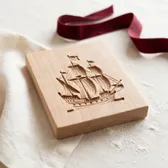
A carved speculaas mold is the gift that comes back every December. The dough is pressed into wooden molds carved with ships, windmills, mermaids, and St. Nicholas himself. See speculaas cookie molds on Amazon
Pepernoten are small spiced cookies that get tossed into the room on Sinterklaas night, usually by an unseen hand that belongs to a helpful neighbor. A bag of them fills a shoe nicely. See pepernoten on Amazon
Catholic Encyclopedia, "St. Nicholas of Myra," 1911
Jacobus de Voragine, The Golden Legend, Caxton's English translation, 1483, "Life of St. Nicholas"
Jona Lendering, Livius.org, "Nicholas of Myra" (five-part article)
St. Nicholas Center, "Was St. Nicholas a real person?" and "St. Nicholas in New York, 1810"
Joshua Schachterle, "What do we really know about the historical Santa?", Bart Ehrman's blog
Tom A. Jerman, "Revisiting the Knickerbocker origin story of Santa," History News Network, December 2022
Rijksmuseum, collection record for Jan Steen, The Feast of St Nicholas, SK-A-385
The Metropolitan Museum of Art, collection record for Bicci di Lorenzo, Saint Nicholas Providing Dowries, 88.3.89
Frits Booy, on Jan Schenkman's Sint Nikolaas en zijn knecht, De Boekenwereld 31, 2015
DutchNews.nl, "Ten things you need to know to celebrate Sinterklaas," November 2015
The Brussels Times, "Who is Sinterklaas, and where can you see him on 6 December?", Maïthé Chini, December 2025
Radio Prague International, "Czech children (and adults) eagerly await Mikuláš," Jan Velinger, December 2012, and "Why does Mikuláš visit on December 5th?", Anna Fodor, December 2021
Expats.cz, "Mikuláš: Czech Christmas Traditions," David Creighton, December 2005
Austrian National Tourist Office, "A raucous Christmas: winter traditions in Austria"
Salzburg tourism, "Krampus und Perchten"
Euronews, "Krampus parades turn violent: Traditional festivities spark debate over safety and gendered violence," Johanna Urbancik, December 2024
Universität Hamburg newsroom, "Wer ist eigentlich das Christkind?", Jan Gehm, December 2025