
An Elf on the Shelf
In many American homes, a small elf turns up in late November and sits somewhere new each morning until Christmas Eve. Each night, the story goes, it flies to the North Pole to tell Santa how the children are doing. A mother and daughter turned their own family's elf into a picture book, and it caught on. Long before that, Christmas elves were watching over farms across Scandinavia.
How the tradition works
It all starts with a book and a box. Carol Aebersold and her daughter, Chanda A. Bell, published The Elf on the Shelf: A Christmas Tradition in 2005. The book comes packed with the elf itself, who goes by the official title of Scout Elf. Families read the story together and then give their new houseguest a name. The name is what gives the elf its Christmas magic, the kind it needs for its nightly trip to Santa.
Life with an elf has one big rule: look, but don't touch. An elf that gets touched loses its magic. It can't talk, but it does listen, so children whisper their secrets and Christmas wishes to it. And since it moves every night, the first job of each morning is finding it.
On Christmas Eve, the elf makes one last trip, following Santa's sleigh home to the North Pole, and this time it stays to help get ready for next year. Then the shelf sits empty until it flies back for Scout Elf Return Week, November 23 to December 1. For many families, that means the elf shows up over Thanksgiving weekend, right along with the Christmas boxes.
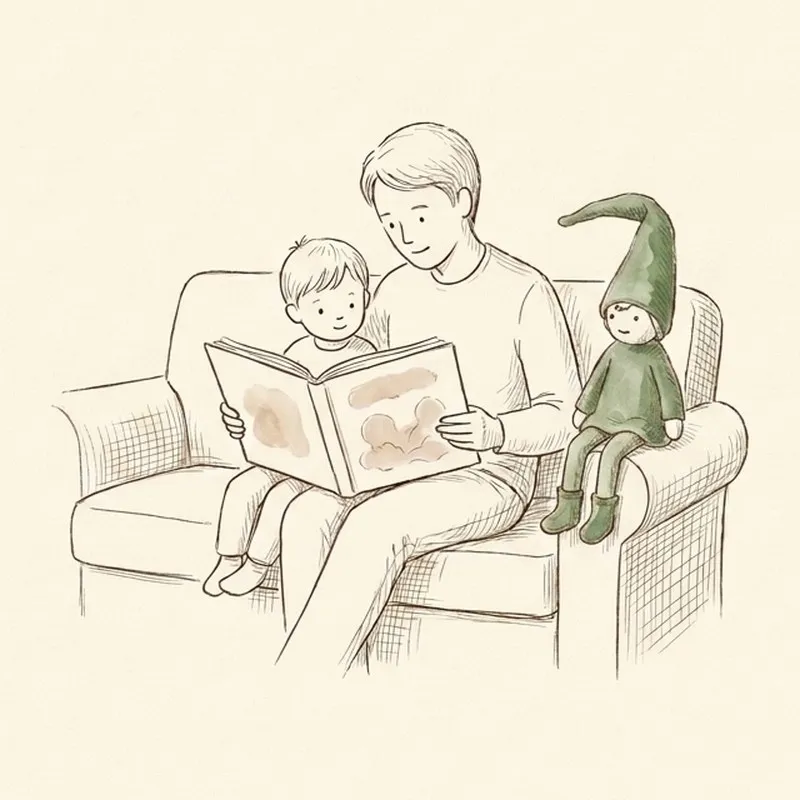 Name it
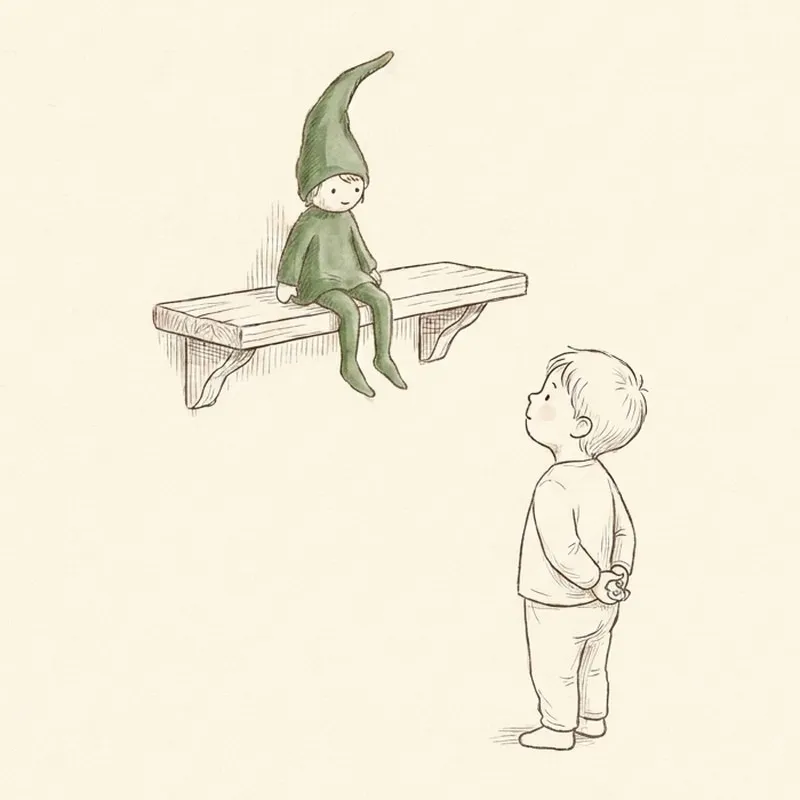 Look, but don't touch
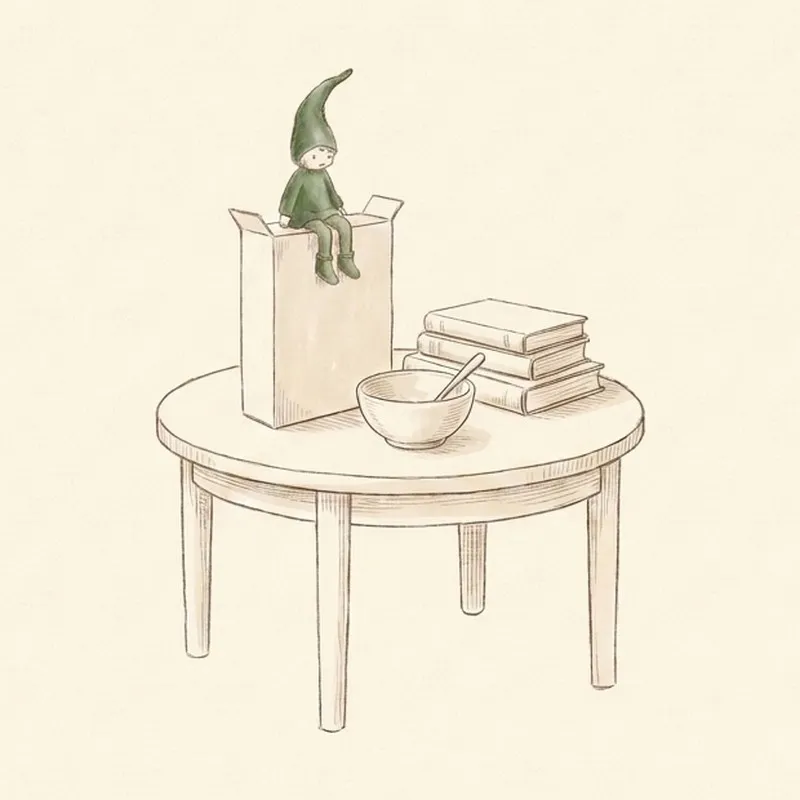 It moves each night
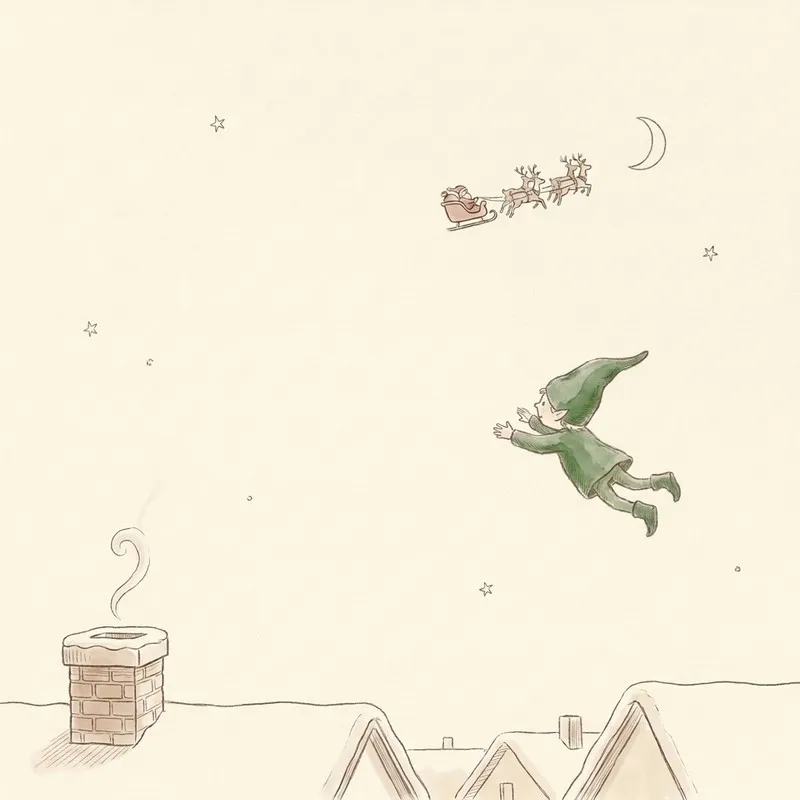 It leaves on Christmas Eve
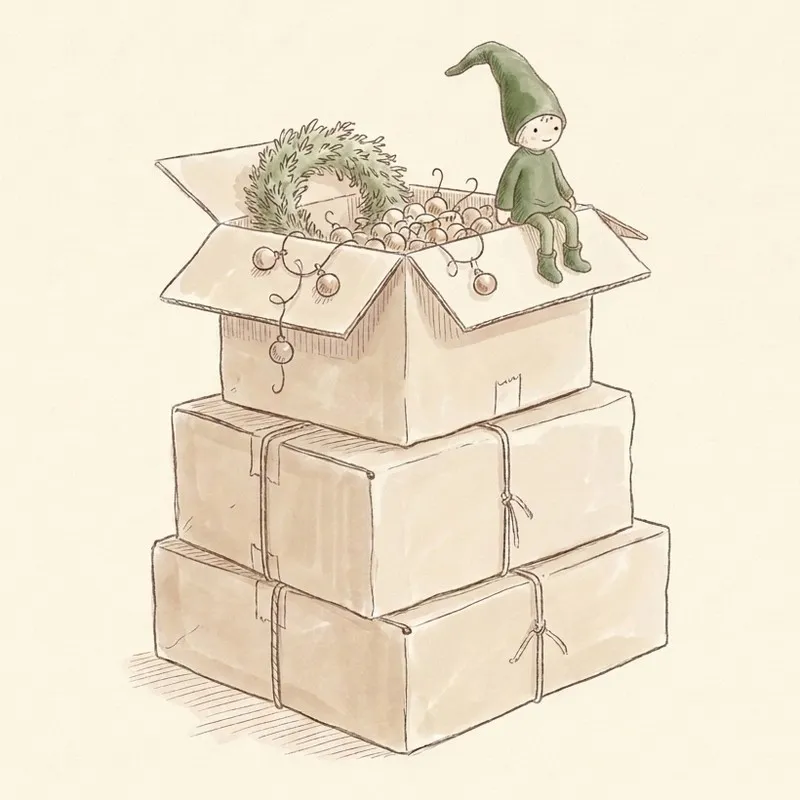 It comes back in late November
Simple ideas for the morning hunt
Sooner or later, you'll run out of hiding spots. Luckily, the elf doesn't need a big production. A new perch is the whole game, and the classics work fine: the top of the fridge, a light fixture, a stack of books, or a cereal box at breakfast. And on a tired night, moving the elf two feet to the left still counts.
Some families add a letter from the elf when it arrives and a goodbye note on Christmas Eve. A few Christmas gift tags are just the right size for an elf's handwriting, and a countdown to Christmas helps children see how many mornings of hunting are left.
Another option is to give the morning hunt a sweet twist. When the elf is found, it brings a small good deed for the day, an idea parenting blogs made popular as Kindness Elves.
Where the tradition came from
The Elf on the Shelf started as one family's Christmas game.
Carol Aebersold grew up with a Christmas elf, and she kept the custom going when she had children of her own. Her kids named their elf Fisbee, and by the family's telling, Fisbee arrived in 1974. Every day, the elf played hide-and-seek with them.
Years later, Carol's daughter Chanda wanted the same magic for her own son, and she couldn't find anything like it in stores. So in 2004, mother and daughter wrote their own.
Publishers turned it down, so the family did it themselves. Chanda put the printing on credit cards, her parents dipped into their retirement savings, and Chanda's twin sister, Christa Pitts, sold a house in Pennsylvania.
In 2005, through their own small company, CCA and B, they printed about 5,000 boxed sets, each with the book, an elf, and a keepsake box. By the end of the year every set was gone, and Christa had left her job as a QVC host to help run the business.
Then the elf caught the country's eye. In 2007, Jennifer Garner was photographed carrying the box set. That attention helped land the elf a segment on NBC's Today show. The tradition grew from there, and the company says that by 2022 Fisbee had more than 22.5 million cousins out in the world.
The Christmas elves who came before
Long before 2005, other Christmas elves on both sides of the Atlantic were already keeping busy: on farms, on windowsills, on mantels, and in Santa's workshop.
Scandinavia's tomte and nisse
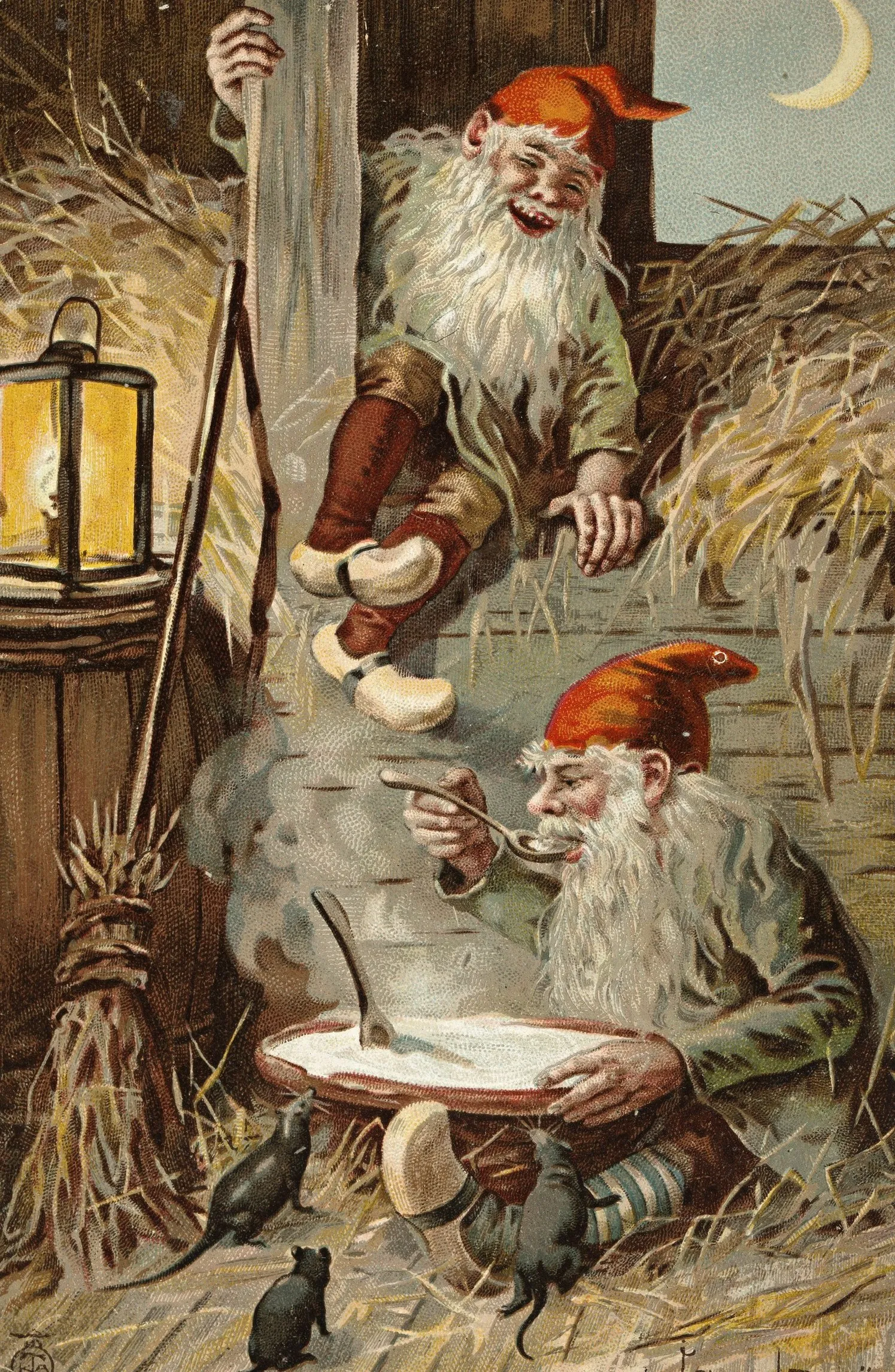
In Sweden, an elf called the tomte lived on the farm. His name comes from tomt, meaning "a piece of land," and he watched over that land and the animals on it. He never let anyone see him, and unlike Santa, he never brought gifts. He did expect the animals to be well cared for, though. Neglect them, and the old stories say he might give you a slap.
In Denmark, the same elf goes by nisse, and at Christmas he was paid in porridge. Farmers left him a bowl of risengrød, a rice porridge, with a generous pat of butter on top. "You better not forget the butter!" warns the American Swedish Institute. A nisse who went without his butter might play tricks on the farm.
In the 1800s, the Swedish artist Jenny Nyström began drawing the tomte on Christmas cards. Her pictures helped shape the story of the Swedish Santa, who is part St. Nicholas and part farm elf.
Iceland's Yule Lads
In Iceland, thirteen brothers called the Yule Lads, or Jólasveinar, come down from the mountains at Christmas. One arrives each night starting December 12, until all thirteen are in town by Christmas Eve. Each is known for a little mischief, from stealing sausages to slamming doors. Icelandic children set a shoe on the windowsill, and each morning there's a small gift inside, unless they've misbehaved. Then they may find a raw potato.
If that shoe sounds familiar, it's because Dutch and Belgian children set one out for Sinterklaas on December 5, the night before St. Nicholas Day.
Knee-hugger elves of the 1950s and '60s
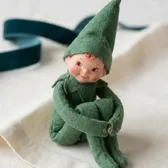
If your grandparents decorated for Christmas in the 1950s or '60s, they may have had an elf on the shelf long before there was an Elf on the Shelf. It was a little felt "knee-hugger" elf, sometimes called a Christmas pixie, with bendable arms wrapped around its knees. These elves were made in Japan, and collectors still hunt for the ones by a maker called Yuletide of Japan. Set one beside a modern elf, and you'll see the family resemblance.
Santa's workshop elves
In America, Santa was an elf himself before he had elves of his own. A Visit from St. Nicholas, the 1823 poem most of us know as "'Twas the Night Before Christmas," calls him "a right jolly old elf." For more about how a fourth-century bishop became that jolly old elf, see our St. Nicholas Day page.
By 1857, he had a whole crew. That December, Harper's Weekly ran a Christmas poem about Santa's "wonderful house of snow":
In his house upon the top of a hill,
And almost out of sight,
He keeps a great many elves at work,
All working with all their might,
To make a million of pretty things,
Cakes, sugar-plums, and toys...
And if a stranger comes near, he "orders every elf to stop," and the whole workshop vanishes "in a frosty mist." Christmas elves, it seems, have never liked being caught.
Gifts for elf season
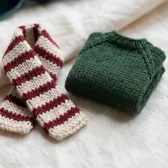
If your family is starting the tradition, we'd begin with the book and its elf. Then let it turn up one morning in a tiny scarf, as if it packed for the trip.
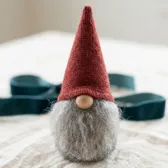
Already have an elf? One of the older Christmas elves makes a sweet companion: a Swedish tomte for the shelf, or a vintage-style knee-hugger for the tree.
Setting out a shoe for the Yule Lads or St. Nicholas? Small treats fit just right.
Elf gift ideas
As an Amazon Associate, we earn from qualifying purchases.
Starting the tradition
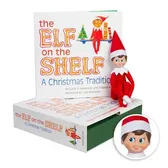
- The Elf on the Shelf book and elf set is how most families begin.
See Elf on the Shelf book sets on Amazon - Elf-sized clothes give a new elf a little personality.
See elf clothes on Amazon
The older elves
- A Christmas tomte figure brings the Swedish farm guardian indoors.
See Christmas tomte figures on Amazon - A small wooden bowl is ready for anyone who wants to set out porridge for a tomte or nisse, with butter, of course.
See small wooden bowls on Amazon - A vintage-style knee-hugger elf recalls the shelf elves of the '50s and '60s.
See knee-hugger elves on Amazon

For the shoe
- Chocolate gold coins fit a Yule Lad shoe or a St. Nicholas shoe.
See chocolate gold coins on Amazon - A picture book about the Yule Lads introduces all thirteen.
See Yule Lads books on Amazon

Sources
- The Lumistella Company, Our Story
- Christa Pitts as told to Taayoo Murray, "I started the Elf on the Shelf with my mom and sister...," Business Insider, December 23, 2022
- Carol V. Aebersold and Chanda A. Bell, The Elf on the Shelf: A Christmas Tradition, illustrated by Coë Steinwart, CCA and B, 2005 (Library of Congress catalog record)
- The Elf on the Shelf, "Easy Guide to The Elf on the Shelf Tradition"
- The Elf on the Shelf, naming FAQ
- The Elf on the Shelf, "When Does The Elf on the Shelf Leave?"
- The Elf on the Shelf, Scout Elf Return Week
- Nordiska museet, Christmas traditions
- National Museum of Denmark, "Danish Christmas through time"
- Smithsonian Center for Folklife and Cultural Heritage, Folklife magazine, on risengrød
- American Swedish Institute, "Who Is Tomte?"
- Icelandic Tourist Board, "The 13 Yule Lads and Christmas in Iceland," November 19, 2013
- Elizabeth Dori Tunstall, "Un-designing Knee-hugger Elves...," The Conversation, December 25, 2013
- "A Visit from St. Nicholas," Troy Sentinel, December 23, 1823
- Harper's Weekly, December 26, 1857, Christmas poem beginning "Beyond the ocean many a mile"
- Justia Trademarks, THE ELF ON THE SHELF, CCA and B, LLC
The Elf on the Shelf is a trademark of CCA and B, LLC. The Gift Pages is not affiliated with the company.